Vehicles
Civil protection path
The fleet, with what it takes not to find a 4×4 off the road on the day of the emergency.
The vehicle record
Registration, make, model, year, fuel, mileage, seats. The status says whether it's available, under maintenance or out of service — and when you put it under maintenance you can say until when and why, so whoever is looking for it knows what to expect instead of ringing round.
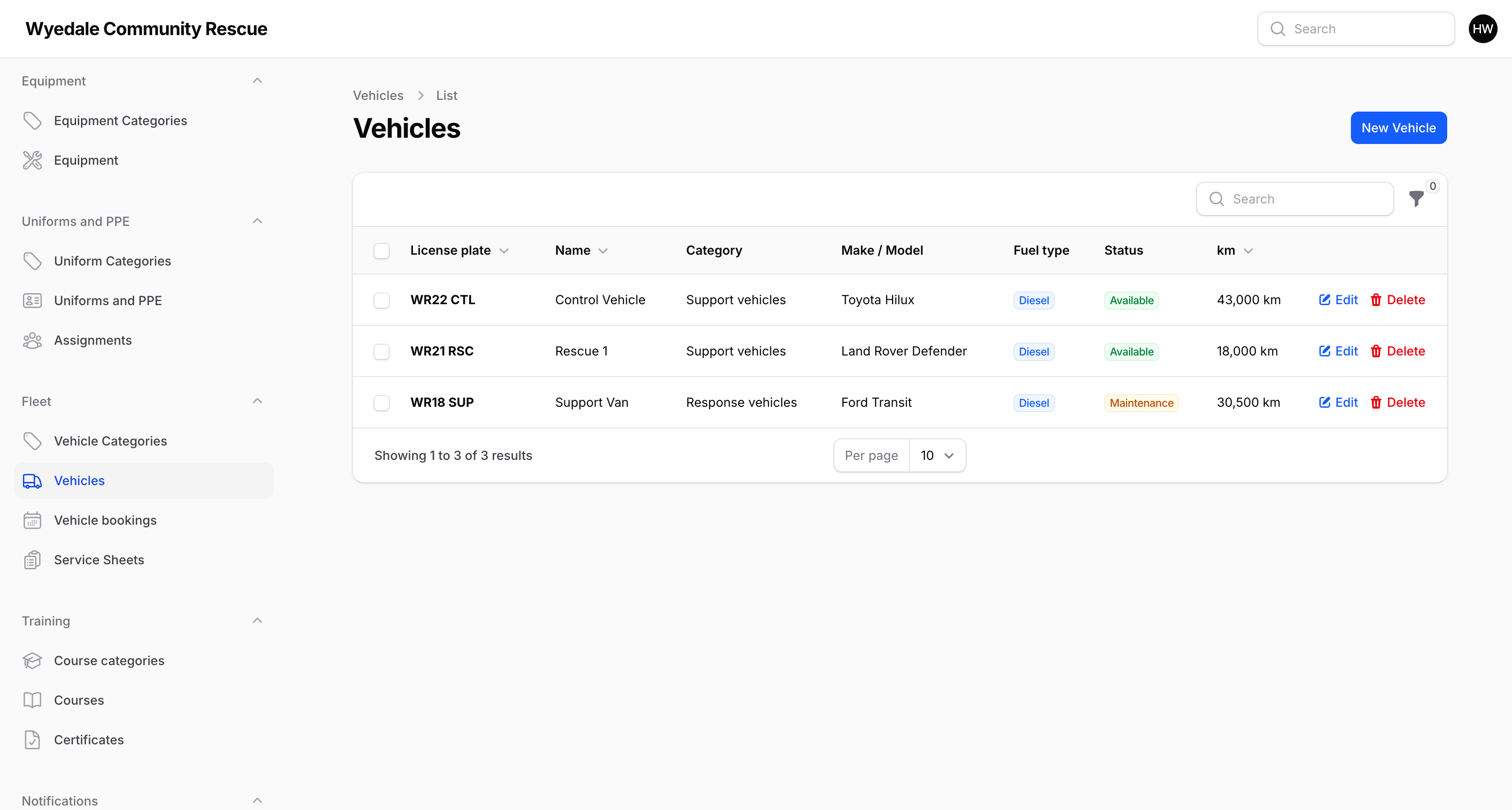
Categories exist to separate what is genuinely different: response vehicles from support vehicles. Don't build twenty categories: two or three is almost always enough.
The vehicle on the shift
A shift can have a vehicle attached. That does two things: whoever turns out knows which vehicle to take, and you can see whether the same vehicle has been promised to two teams at the same time.
Documents and expiry dates
Insurance, MOT, road tax: they go on the record with their dates. Anything approaching expiry surfaces on the dashboard, alongside the organisation's other expiring documents.
The duty sheet
Every outing can leave a sheet: who drove, when they left and returned, the mileage, the fuel, and notes on what happened. Filling it in isn't compulsory — but it's what saves you when someone asks about an outing six months later.
Where to start
Load the vehicles with registration and status. Add documents when you have the paperwork to hand: the system asks for nothing until you give it something.